

Conversations: The Language of the Living World with Robert Macfarlane
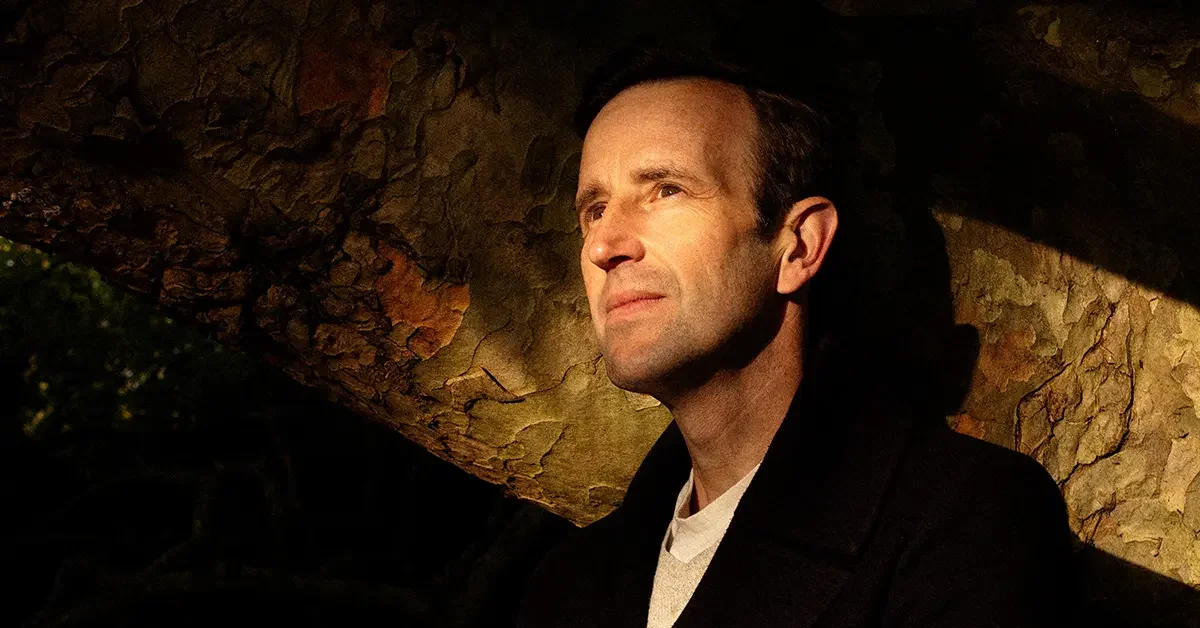
How does the language we use affect our relationships with the rest of the living world? And what if by shifting the way we speak and write, we can open ourselves to more ways of thinking, to other ways of being? What if we thought of a river or a mountain as a “who” instead of a “what”?
Robert Macfarlane is a Professor of Literature and the Environmental Humanities at the University of Cambridge. In his book Underland, published in 2019, he writes “words are world-makers and language is one of the great geological forces of the Anthropocene.” He has continued his pursuit of language that animates rather than deadens in subsequent books, including Is a River Alive? and most recently, The Book of Birds: A Field Guide to Wonder and Loss. In this conversation, Robert and Amy think together about words and metaphors that bring us more fully into relation with the world around us, and how these semantic choices might shape our collective future.
This episode was produced and released in collaboration with Orion Magazine.
Resources and Links
A few of Robert’s pieces in Orion
The Silent Planet, the musical piece Robert mentions, by Delia Stevens and Will Pound
Transcript
[00:00] INTRO
AMY: Welcome to Threshold Conversations, I’m Amy Martin, and this episode is being released in collaboration with Orion Magazine. Find it at orionmagazine.org.
AMY: I think one of the reasons our ecological problems can feel so overwhelming is that our tools for addressing them are not fit for purpose. Climate disruption, plastic pollution, biodiversity loss — even as we sign petitions, show up for rallies, and push for changes to laws and policies, we can feel that something much bigger and deeper is needed to effectively address these issues. We need fundamental paradigm shifts: a major re-imagining of our relationships with the rest of the living world.
That’s why I find reading Robert Macfarlane not only a pleasure, but a relief. In his book Underland, published in 2019, he writes “words are world-makers and language is one of the great geological forces of the Anthropocene.” It’s an example of how he’s thinking at the tectonic level, inviting us to examine the conceptual frameworks that end up shaping our actions far more than we often recognize. In his 2025 book, Is a River Alive?, Macfarlane builds on that idea, and challenges himself and his readers not only to think about rivers, but to think about how we think and talk about them. Is a river an it, or a who? Is it a thing, or a being?
I spoke with Robert a few weeks after hearing him give a talk at a festival in London, where he introduced himself not by giving his job title — he’s a Professor of Literature and the Environmental Humanities at Cambridge — but rather by locating himself in relation to his home lands and rivers, inspired by the Maori tradition of greeting one another with the question: who are your waters? He was demonstrating how a shift in language — something any of us can choose to do — can start to shift our thinking, and ultimately, our collective action.
Robert Macfarlane, welcome to Threshold Conversations.
ROBERT: Thank you for having me, Amy.
AMY: So let's start with that question: who are your waters?
ROBERT: One of my rivers in that sense is a spring called Nine Wells, who rises near my house, flows into the brook called Hobson's Brook, flows into the River Cam, flows into the river Great Ouse, flows into the North Sea. Another is the River Dee, a Scottish Dee, who is named for a god, Deva, and who rises on the Cairngorm Plateau, a mountain range that is very dear to me.
AMY: So you use the word who and not what or which very purposefully in this context. Can you talk about that? Why?
ROBERT: Well, it's part of what Robin Wall Kimmerer so famously now I think calls the grammar of animacy. So Robin is talking there about the ways in which certain languages register animacy and dynamism, the kind of verbed, processual nature of the world. Beginning to recognize the, as it were, the deadened grammar, the grammar of inanimacy that I think governs much of English.
For example, English objectifies the living world as an ‘it.’ And so to ‘who’ a river or to ‘who’ a forest sounds strange on the ear when you first meet it. It's a confrontation with a disruption. So I've now naturalized it largely and it's there now in everything I write, and people sort of trip over it, and that's good.
AMY: I'm really curious how your process of first tripping over that and then and then being like, wait, maybe that's a good thing to trip over.
ROBERT: A good trip.
AMY: Yeah, a good trip. How did that happen to you? What do you remember being taught as a child about what was considered animate and inanimate, and when did that start to get confused or disrupted for you?
ROBERT: I have this memory of hanging as a swimmer, face down with a snorkel mask on over a big deep, we would say horseback-brown pool in a Scottish river, because the Scottish rivers often flow through peat, so they pick up the stain of the tannins and the stain of the peat, and they go this gorgeous whiskey color, chestnut color.
And down inside it there were these forms, torpedo-like forms which looked almost geological within the water, but then were finning. And they were, of course, migrating salmon that were making their way upstream in the Earn. But I didn't know anything about the salmon lifecycle at that point. What I knew is that that was a kind of livewire presence of life in river, and it lit me up in the ways we remember certain huge primary encounters from when we were young.
But then, I still find it hard to think that we could speak of a mountain as alive or a mountain as having a memory or a forest as having a mind, in Eduardo Kohn’s phrase. I think that the difficulty of it is a measure of how hard it is to think outside the systems of knowledge, and, as it were, ontology that we grew up with. I think because I'm so made of the enlightenment systems, the notion that only that which is calculable is coherent, should we say, or of non-life as being, as Newton calls it, brute inanimate matter.
If we think of the other story that is told, which is a story where life lives in relation, life exists at the interface, which is sometimes called process ontology, then a river makes more sense as alive, because the river is always in relation and all that it enables, all that it enlivens is enlivened by that relation, by the natures of those relations, what Merlin Sheldrake famously calls entangled life. Does that start to make sense?
AMY: It does. And it also kind of leads me into something that I really wanted to dig into with you a bit, which is, depending on your cultural background, what seems to make common sense can be diametrically opposed.
ROBERT: Too right. Yeah.
AMY: And so I guess I'm kind of wondering, how much do you think or talk about these kinds of questions with people who are outside of the academy or maybe aren't that interested in parsing, you know—
ROBERT: Ontologies
AMY: Yes.
ROBERT: Yeah, totally. I mean, whenever I give a public talk, I'll have some people come up afterwards and they’ll go ‘well, obviously a river’s alive,’ and then the next person in the line will be like, ‘what do you mean a river’s alive, of course it's not alive. It's gravity plus H2O. Don't be an idiot.’ And I like talking to those people. I like it because I'm kind of one of them too, in part of my life.
But that's where I write books. That's where I have conversations with people like you. Because these are questions which are fundamental to all of us. What is life? Does our fate flow with that of rivers? What do we deem to be dead and and what do we deem to be worthy of bearing rights in this world? You know, they’re as important as they get.
And so the river becomes a way of lighting up those huge questions and condensing them into form that we can recognize. Everyone loves the river, or at least everyone has a river, let's say.
AMY: Yeah.
ROBERT: I really hear you on this question of, as it were, preaching to the converted or singing to the choir. Sometimes I do think that it’s almost like a kind of hipster ecology at work, that there are certain phrases that become a kind of cant, like, ‘multi-species thinking’ or ‘interspecies empathy’ or something like this, which are really, really important. And yet they can almost become just a little kind of calling card that you show to show your thinking, show your caring.
So I really relish challenge, because then you have to stand by it and step up to it and think, well, what does this mean? And one of the things I say is, well, if you don't feel easy thinking of a river as alive, think of a dead river or a dying river. And people sort of stop at that, especially in my country where our rivers are in this desperate, desperate condition, as you know. We're surrounded by wounded rivers. And it's interesting, these metaphors kind of appear in mainstream press as well, like ‘the River Wye is dying,’ you'll see on the BBC or the Guardian and yeah, it is dying.
We find it quite easy to speak of dying rivers. Maybe a bit harder to speak of living rivers. So that's often a good common ground. How has your river changed in your lifetime? What was the one you grew up, the one you could swim in, or the one you could drink, even? Now it’s the one you can't touch. Even if someone still pushes back against the philosophical principle, what's under discussion there is relation, is relation with river, with forest, with mountain, with the bigness outside ourselves, as Sherwood Anderson calls it. How do we, as Robin Wall Kimmerer puts it, turn attention to intention to action. And I love that. But getting from attention to action is key, but it does begin in something like the ethical, something like even the aesthetic, something devotional. Attention, intention, action.
AMY: And it also begins in words and thought, language. I think that is so important to think about. And that's kind of where having what could be fun, arcane conversations about words and concepts, and is it an ontology of this kind or that kind, it starts to get grounded in like, well, this actually matters because it shapes what even is in our sphere of thinkable thoughts.
ROBERT: Yeah, absolutely. What it is possible to think, what it is possible to imagine. Absolutely. And I sometimes—I mean it's easy to to Trump bash—but I sometimes give the example of the fact that very demonstrably and from the beginning of this second Trump administration, it has been clear that what you and I would probably call nature or the living world, the environment, not a word I like, has been fully assetized. Like Doug Burgum said in his Senate confirmation hearing that America's public lands are America's balance sheet. And so that's an example of how land is imagined as stuff, as matter, how water is imagined as pure resource, not life force. It is a kind of metaphoric rendering which then expresses itself absolutely in the exercise of power. So when we fight over the meaning of words, we’re fighting over the expression of power, or of love. So, yeah, they really matter.
AMY: I'm glad you brought up metaphor. Often, as we're trying to think about and feel about the natural world—I'm putting little quotes around that—we use metaphors. We need metaphors. What is one that you would love to see wither and die? And what is one that you feel like we should be embracing more fully, a useful metaphor?
ROBERT: I'm going to put on my mortarboard briefly as Cambridge don or whatever. I don't know why people call us dons. It's so kind of mafioso. Anyway, as a teacher of literature and language, a metaphor, I think Aristotle gives us the best definition. He defines metaphor as like and likeness. And I really love that. It's where you take one thing and you convert it into another thing with which it has some kind of resemblance across time and space.
And I love that it can come from anywhere. Metaphors are far fetched, and they bring the like and the unlike into conversation. So I adore them for that power. They can be terrible as you say, as well as powerful. But in their function, they are kind of fantastical.
So what metaphors? Well, this is sort of an answer, but one thing I always say is that it's so strange that river is only a noun in English and not a verb. What could be more of a verb than a river? So that is kind of a metaphor that we recognize river as a verb, as process, as force, and as a kind of onrushing presence.
Oh, gosh. What metaphors would I like to see abolished? So I hate the metaphor of human life as being atop the pinnacle, basically. Life is not a hierarchy. Life is a web. That's a key metaphor which gets deeply entrenched in Western philosophical and then political thought through what is sometimes called the great chain of being or the scala naturae, which Aristotle comes up with first, Plato contributes, which basically says angels, men, animals, plants, everything else. So it segregates and it and it hierarchizes in terms of power, and literally in terms of anima, in terms of life. So as you go down from humans, you reduce the anima, so you reduce the kind of moral status of the thing. But we're not, we're part of a web. We're a species in a web. We have to recognize life as a web, not a ladder or a hierarchy or a pinnacle. And then in a more trivial version, there are so many metaphors which kind of compare us to animals as though animals were stupid or worthless or lazy or—so ‘bird-brained,’ I don't know if you have that.
AMY: Oh, yeah.
ROBERT: Oh, yeah. Okay. So when somebody calls me bird-brained, I'm like, thank you. That sounds great.
AMY: So you say I can survive an asteroid hitting the planet.
ROBERT: Yeah, exactly. Look, the dinosaurs just under the skin in me. Or, I can navigate 8000 miles across open ocean without any kind of prosthesis or technological aid, putting one half of my brain to sleep, alternately, so I keep flying, in the case of the bar-tailed godwit, say.
AMY: We’ll have more of my conversation with Robert Macfarlane right after this
MUSIC
[15:12] BREAK
MUSIC
AMY: How do you respond if someone describes you as a nature writer or an environmental writer?
ROBERT: [Hissing sound.] It’s one hiss. My line on nature writer is that it's a tautology. So it's saying the same thing twice. When we segregate nature as the thing over there, where the humans are separate from it, or writers are somehow separate from it, it just feels like we're perpetuating a schism, the superiority schism, we could call it. And a false one, a false one. So I'm a writer who writes about people and places and the web of life and nuclear waste and dolphins and all the rest of it. What was the other thing you called me?
AMY: We have the same problem. So I am a journalist, and I write and tell stories about da-da-da-da. Like, I give you a bunch of specific examples and you live with that jumble. The other one was ‘environmental writer.’
ROBERT: Yeah. Well, I alluded to it earlier, but these two words, environment and climate change, I don't know about you, Amy, but I have had so many conversations where I mentioned either of those words, particularly climate change, and it's almost like a nictitating membrane slips down over the eyes of my interlocutor, like a bit of a kind of third eyelid just goes ‘thunk’ and they're gone, their brain is on their shopping list or whatever.
And I know that feeling myself, for whatever reasons, and in ways I deeply wish I could shift, those words have been, often by highly vested interests, stigmatized into uselessness, I think broadly. And it's partly what Sianne Ngai, this great cultural theorist, calls the ‘stuplime.’ She says when we hear key words over and over again we experience them as a concussion of small fatigues, I think is the phrase she uses. Basically, we've become numbed to those terms and we turn away from them.
So how do we, as people working in those fields, reactivate them, reanimate or find alternatives to them? And I've started to set myself the task. I did a big musical project called Earth, The Silent Planet with these two extraordinary musicians, Delia Stevens and Will Pound. And they had imagined it as a climate piece. And I said, yes, it is. It absolutely is. And thinking back to your series, Hark, It's about the silencing of this polyphonous world on which we live. But my challenge to them was, let's make this without once using the words climate or environment.
AMY: Yeah
ROBERT: And I think we made a better piece, a much more powerful piece. It's not to diminish climate change as a fact, as a set of circumstances. It's like, how do we keep finding new languages, new stories, new effects that reach hearts and minds and guts?
AMY: It feels to me, whatever words we use here, if I had to try to name a driving force that kind of ties your work together, I would guess at it being something like: you want people just to think more and think better about this thing we call nature. To just both quantitatively and qualitatively improve or increase our thinking—and feeling.
ROBERT: Feeling. Yeah, I was going to add that. Exactly.
AMY: Does that feel accurate to you?
ROBERT: Yeah, I suppose, yes, once feeling gets added to that. Definitely. I mean I am a thinker by trade as it were. But we have to draw on all of the resources of language, rhythm and and sound of emotion, of story, of the power that language and storytelling have to reach out of the page and cause us to fall in love with people we've never met, places we've never seen, might even convince the skeptical among us that a river is a living being and should have rights.
I suppose the only other thing I'd say is that I've realized a number of key ideas have really animated me over 20 to 25 years. One is increasingly this idea of deep time or intergenerational thinking, which I wrote most about in Underland, but has been there right from the beginning, in Mountains of the Mind. And that's this idea which is that planetary history extends vertiginously behind us, and if we, as it were, turn and look over our temporal shoulders, we see an abyss of engulfing immensity. But it also extends ahead of us, and actually, instead of us feeling that the vastness of the planet's age is a kind of alibi for our short term actions — oh, it'll all be all right in the end — in fact, we recognize ourselves, the miracle of our being, as astonishing. Not only the existence of the planet, but our existence upon the planet in this moment of time. And we are the inheritors of these webs of life that have left their legacies and enabled ours. And we, in turn, are legacy leavers. We leave on in deep time, and we live on in deep time. And for me, that sharpens rather than annihilating the responsibilities that we have to those who will come after us.
You’ve probably heard me say this before, but it's sort of something I didn't realize until after I had finished Is a River Alive, that despair is a luxury and hope is a discipline, I think that's where I live now. And Rebecca Solnit gives us a lovely gloss on this, that just because we cannot save everything does not mean we cannot save anything, or that anything is not worth saving. And that feels vital to me.
AMY: Yeah. One of the things that, really, for me, holds both the despair and the delight: birds! I want to talk about birds, to end. And I know we just have a few minutes left. Tell me about your latest book, The Book of Birds.
ROBERT: Gosh, it's been seven years on and off. I think in the US its subtitle is A Field Guide to Wonder and Loss, and it's my attempt, and the artist Jackie Morris, my coauthor, co-creator of the book, to reimagine what a field guide looks like, a bird book might look like. Jackie is, I think, one of the great living bird artists now. So yeah, a love letter to birds and a reimagining of the field guide.
AMY: Why did the field guide form attract you? Why did you want to make a field guide? And why do you want to make one that was very different from a typical field guide?
ROBERT: Well, I love field guides. I don't know, are you a field guide person?
AMY: Oh, yeah. They’re so fun.
ROBERT: Oh, yeah. I sort of think we don't talk about them enough as a form of literature, really, or as a form of power, imaginative power, life-shaping form or tradition. There must be hundreds of millions of copies of field guides in the US. I know houses that have 20, I know houses that have three and one’s in the car and one's on the windowsill, and one's got forgotten about down the back of the sofa.
So I grew up with one in particular that I bought when I was ten and kind of loved to death, but still have, and I can still picture the pictures and remember the prose. I sometimes say it helped me kind of fall headfirst into the world of birds. And that seems like an incredible thing for a book to be able to do, and it’s not a storybook. So we wanted to create an homage to that form and that tradition.
Is there a field guide that you love particularly or a kind that you remember from your childhood, or that you still have?
AMY: You know, I don’t remember. I can exactly remember what it looked like, and what some of the pictures looked like. This kind of blue chunky book. Yeah, it just kind of felt like having a glossary or a dictionary for the world.
ROBERT: Yes. A glossary of magic. Very early in Jane Eyre, there's an amazing scene where Jane, who's really unhappy at home, is hiding behind a red curtain, sitting on a little cushioned bench and trying to escape her very unhappy childhood. And she's reading a copy of Bewick’s Birds. She's reading a very early field guide, and it calls her out of herself. And she travels to the Arctic. It's this wonderful reading as escape, but it's not a novel, it's Bewick’s Birds, and that's always stuck with me as well.
AMY: What's your favorite bird?
ROBERT: Well, I think it changes, but right about today, because it's very hot here, I'm going to say the dipper, Cinclus cinclus, which you must have up there in Sweden, a really good signifier of clear-watered rivers. But the only songbird that can swim underwater, getting down in the cool, clear water of a healthy stream on a hot day. So, dipper. It's the only aquatic songbird.
AMY: I didn't know that. I actually have not seen them here, but we have them in Montana. And I knew that they sang, and I've watched them so many times doing their cool little, you know, dipper dance. But I did not know that they could actually swim under water. Oh, that's lovely.
ROBERT: Well, not only that, but they basically walk upstream, hunting for little inverts on the stones on the bed of a stream or river. And the way they do that and don't get swept off their feet is that they've developed a way of kind of crooking their back and arching their wings out, so the current effectively presses them down in a way they can control with movements of their body. So that gives them the equivalent of the lead-lined boots of a deep sea diver, and allows them to walk upstream against the flow and hunt, and then up they come and shake themselves clear. So how cool is that?
AMY: Bring on the birdbrains. Please call me a birdbrain.
ROBERT: Yes, here’s to the bird brains, exactly.
AMY: It was so delightful to speak with you. Thank you for taking the time to talk, I really appreciate it.
ROBERT: I really, really loved it. Thanks, Amy.
MUSIC
AMY: You can find Robert’s books, including his most recent one, ‘The Book of Birds: A Field Guide to Wonder and Loss,’ on the shelves of your local bookstore. If you’d like to learn more about The Silent Planet, the musical piece he mentioned, you can find a link to that in the show notes.
Threshold Conversations is produced by Sam Moore. Our music is by Todd Sickafoose.
I’m executive producer Amy Martin, and with this episode, we are launching a new collaboration with Orion Magazine. We’re going to be co-publishing Threshold Conversations episodes with Orion every quarter. You’ll be able to find them here on our feed, like always, but also on their gorgeous website, orionmagazine.org. If you’re not already an Orion reader, I encourage you to check it out — it’s a home for thoughtful writing about nature, culture and place, and I suspect that as a Threshold listener, you’re going to love it.
Thanks to Orion for partnering with us, thank you for listening, and if you’d like to find out about our new live show and some other upcoming events, please sign up for our newsletter at thresholdpodcast.org.