
The Corridor
A series about history, pollution, and resistance on the front lines of America’s petrochemical industry.
Over seven episodes, The Corridor examines how Louisiana became a center of industry and an epicenter of disease, with some communities facing cancer risks among the highest in the nation. Everything that’s happening in the industrial corridor today has been shaped by history - from slavery and segregation to huge technological breakthroughs and environmental change. Across the series, we explore how residents have pushed back - against the destruction of their past, the construction of more plants, the lax enforcement of environmental regulations, and further harm to people’s health as they seek to claim their right to a prosperous and healthy future.
E P I S O D E 1
River Road
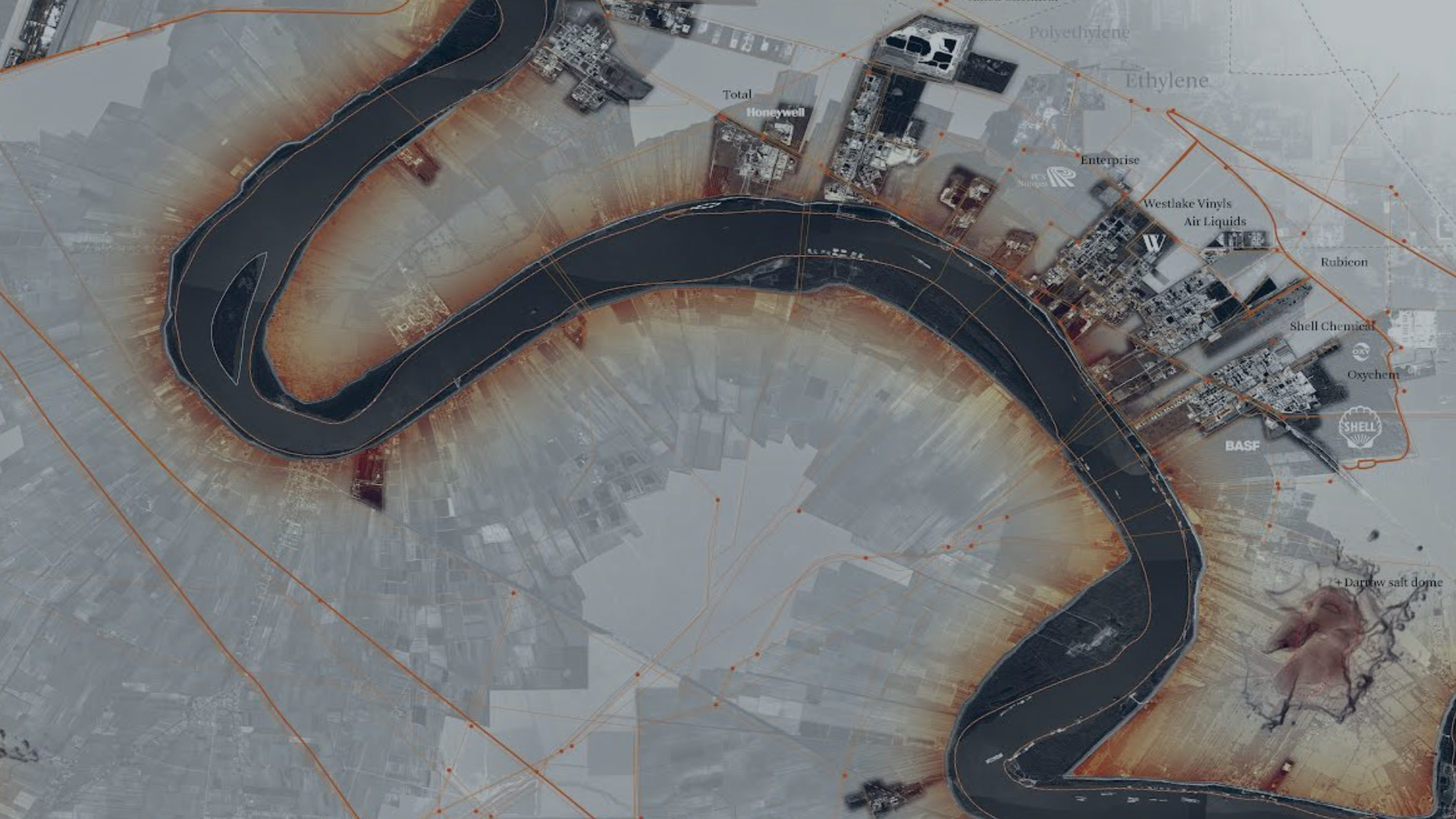
One of the largest concentrations of petrochemical plants in the country lies along the Mississippi River between Baton Rouge and New Orleans. Petrochemicals are made from fossil fuels. We use them to make a huge range of synthetic materials that are found in almost every part of our daily lives— they are made where people live. Here, amidst houses, schools, and churches, more than 150 plants release toxic pollution into communities that are often poor and black. In this episode, we meet residents and explore what it’s like to live in - and love - a place at the center of our modern consumer culture.
E P I S O D E 2
Sugar is Made With Blood
Before gas, oil, and benzene, there was sugar. This is the story of the first industry that exploited people in the Corridor–an industry that brought the ancestors of today’s residents to the area and laid the foundations for the modern petrochemical industry.
E P I S O D E 3
The Smoke of Progress
At the beginning of the 20th century, the Corridor began a transition from one deadly industry to another— from sugar to petrochemicals. This transition wasn’t a coincidence. The history of industry intersects with the history of race in Louisiana all the way up to the present day. In this episode, we look at how and why petrochemicals came to the Corridor.
E P I S O D E 4
What Can Be Measured Can Be Changed
We know that many of the chemicals being released by plants in the corridor can cause cancer. We also know that the cancer risk along this stretch of the Mississippi is unusually high. But how do we know for sure that these things are connected? In this episode, we explore what we know about pollution and disease.
E P I S O D E 5
You’ve Got to Fight
People have long objected to the toxic side effects of industry in Louisiana – and across the country. A swell of activism in the 70s and 80s connected civil rights with environmental issues and public health, so that by the 1990s, it seemed like the nation was entering an environmental justice renaissance. And yet, low income and minority communities have remained at risk. In this episode, we follow the history of environmental justice activism and how the Corridor became a poster child for unevenly distributed pollution.
E P I S O D E 6
Justice Denied
For decades, the residents of St. John the Baptist Parish breathed in toxic chemicals from a massive complex that makes neoprene - a synthetic rubber. But while residents suspected something was wrong, they were still shocked when the EPA told them they had the highest risk of cancer in the nation. Why were they just now being warned? And what was the government going to do about it? In this episode, we follow one community’s search for justice.
E P I S O D E 7
The Future
We’ve been telling the story of the petrochemical industry in Louisiana, but this isn’t just a Louisiana issue, or even just an American one - petrochemicals are a global industry with a global impact. In this episode, we think about our collective future, and how we might begin to navigate living with all this plastic.
C R E D I T S
Host and Reporter: Jaha Nailah Avery
Producers: Erika Janik and Sam Moore
Writers: Erika Janik and Sam Moore
Editors: Erika Janik and Amy Martin
Music: Joy Clark and Todd Sickafoose
Executive Producer: Amy Martin
Communications: Halee Bernard
Art Used with Permission: SCAPE Studio, The Ethylene Network, 2014, Visual Narrative, in Petrochemical America, by Richard Misrach and Kate Orff, n.p.: Aperture, 2014, 139.